
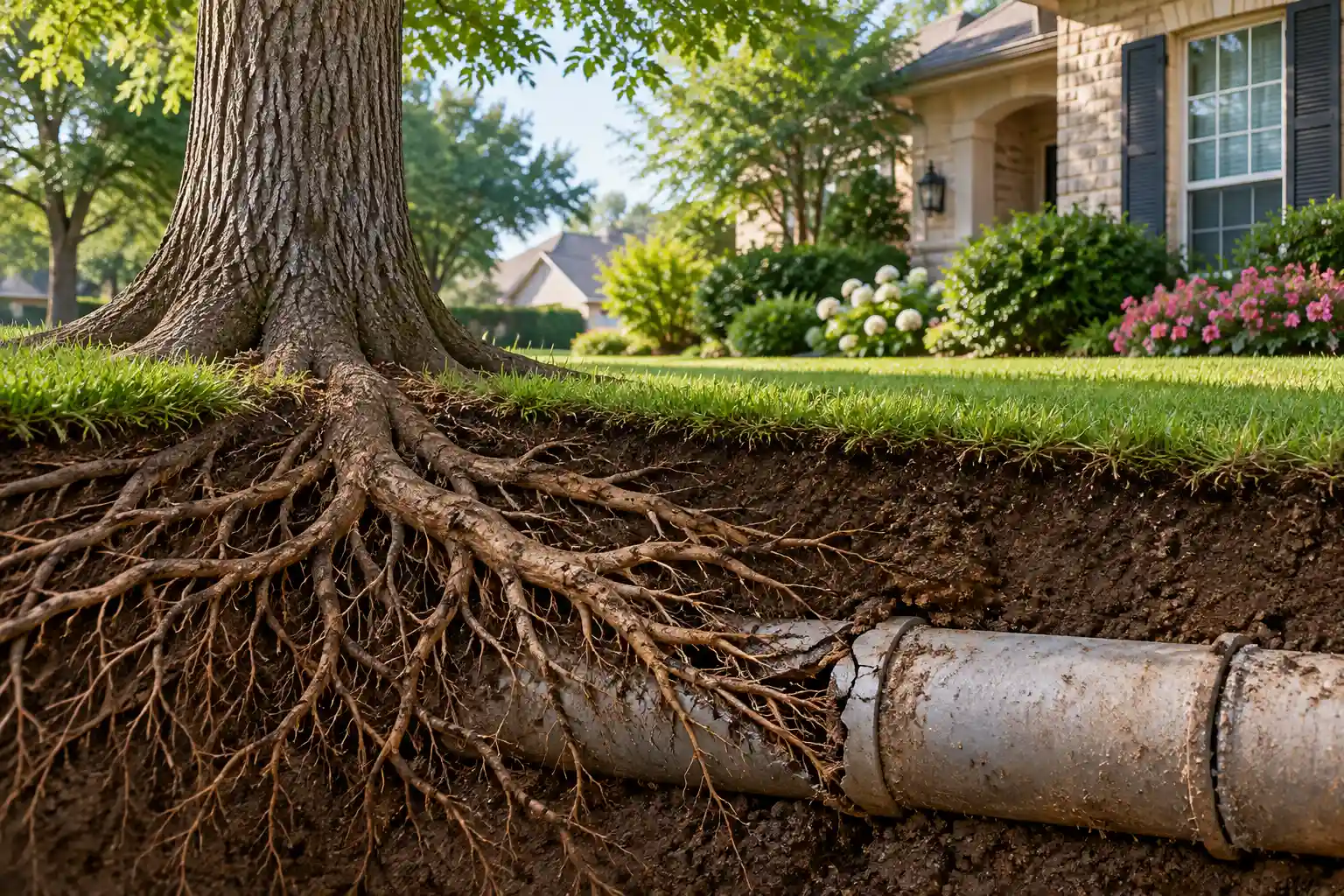
Can Tree Roots Damage Sewer Lines? What Houston Homeowners Should Know Before Landscaping

Lanscaping Team
AuthorCan Tree Roots Damage Sewer Lines? What Houston Homeowners Should Know Before Landscaping
A beautiful Houston landscape starts with choosing the right plants and putting them in the right places.
But there is something beneath the lawn that homeowners often forget about:
underground utilities and plumbing.
Trees and large shrubs can transform a property by adding shade, privacy and curb appeal. Their root systems, however, continue expanding underground long after installation.
That raises an important question for Houston homeowners:
Can tree roots damage sewer lines?
The short answer is that roots can become a serious problem when they encounter vulnerable underground drainage pipes.
That does not mean homeowners should stop planting trees.
It means landscaping should consider what exists below the surface as well as what looks good above it.
Here is what Houston homeowners should know about trees, landscaping and underground sewer lines.
Why Tree Roots Grow Toward Sewer Lines
Tree roots naturally search for the things plants need:
* Water
* Oxygen
* Nutrients
* Suitable soil
A properly functioning sewer pipe should keep wastewater contained inside the piping system.
Problems can begin when an older or damaged pipe develops a:
* Crack
* Loose connection
* Failed joint
* Opening
* Deteriorated section
Moisture escaping around that area can create conditions that attract root growth.
Very small roots may find their way into existing openings.
Once inside, they can continue growing.
That is where a landscaping issue can turn into a plumbing problem.
Do Tree Roots Actually Break Sewer Pipes?
This is an important distinction.
Roots do not always attack a perfectly intact sewer line and suddenly break through it.
Often, the pipe already has a vulnerable area.
For example:
Aging sewer line
↓
Small crack or failed joint
↓
Moisture escapes into surrounding soil
↓
Roots grow toward moisture
↓
Roots enter existing opening
↓
Root mass becomes larger
↓
Wastewater flow becomes restricted
Eventually, roots can worsen the condition and contribute to significant sewer problems.
Why This Matters in Houston Landscaping
Houston has a long growing season.
Trees, shrubs and lawns can develop aggressively when they have enough water and favorable conditions.
At the same time, many established Houston neighborhoods contain mature trees and older underground infrastructure.
That combination makes the relationship between landscaping and underground utilities important.
Before planting a large tree, homeowners should think beyond how the yard will look next year.
Ask:
What will this tree look like 10 or 20 years from now?
And just as importantly:
Where will its roots be growing?
Know Where Underground Utilities Are Before Planting
Before major digging or planting, homeowners should identify underground utilities.
A property can contain buried:
* Water lines
* Sewer lines
* Gas lines
* Electrical lines
* Irrigation
* Communication lines
Do not assume underground pipes follow the exact route you expect.
Properties may have been remodeled or repaired over time, and underground systems are not always obvious from the surface.
Major landscape projects should account for what is beneath the yard before digging begins.
Where Does the Home's Sewer Line Run?
The main sewer line usually carries wastewater from the house toward the municipal sewer connection or another approved wastewater system.
Fixtures such as:
* Toilets
* Sinks
* Showers
* Bathtubs
* Washing machines
eventually discharge into the home's drainage system.
That means a sewer problem can affect far more than one fixture.
Knowing approximately where the sewer line travels can help homeowners make better landscaping decisions.
Warning Sign #1: Multiple Drains Begin Backing Up
One slow sink might simply have a local clog.
But when several plumbing fixtures begin behaving strangely at the same time, the issue can be farther down the drainage system.
Watch for combinations such as:
* Toilet and bathtub backing up
* Multiple slow drains
* Water rising in a shower when a toilet flushes
* Gurgling from several drains
These symptoms do not automatically prove tree roots are involved.
But they can indicate a larger drain or sewer problem that deserves investigation.
For Houston homeowners experiencing these symptoms, a professional plumbing company such as Hugo Plumbing's Houston sewer line repair team can evaluate whether the issue involves roots, a blockage, damaged piping or another problem.
Warning Sign #2: The Same Drain Problem Keeps Coming Back
A drain is cleared.
Everything works again.
Then several weeks or months later, the problem returns.
Recurring sewer backups deserve more attention than a one-time clog.
Possible causes can include:
* Root intrusion
* Damaged sewer piping
* Pipe misalignment
* Heavy buildup
* Collapsed pipe
* Other structural problems
Repeatedly clearing the symptoms without identifying the cause can turn into an ongoing cycle.
Warning Sign #3: Gurgling Toilets
Plumbing systems need air and proper flow.
When wastewater has difficulty moving through the drainage system, homeowners may notice unusual sounds.
For example:
* Toilet gurgling
* Bubbling in drains
* Water moving unexpectedly between fixtures
These symptoms can occur for several reasons, so professional diagnosis matters.
Warning Sign #4: Unusual Areas of Yard Growth
Sometimes underground leaks can affect the landscape above them.
A section of lawn that suddenly appears unusually:
* Green
* Wet
* Soft
* Fast-growing
may deserve attention.
However, landscaping and irrigation problems can create similar symptoms.
Before assuming there is a sewer leak, consider whether the area is being affected by:
* Sprinkler coverage
* Drainage
* Downspouts
* Irrigation leaks
* Natural low spots
The important thing is recognizing a change that does not have an obvious explanation.
Can Sewer Problems Damage a Landscape?
Yes.
A significant underground plumbing problem can eventually affect the yard itself.
Possible symptoms can include:
* Saturated soil
* Soft areas
* Unpleasant odors
* Erosion
* Disturbed landscaping during repairs
This is another reason landscaping contractors and plumbing contractors sometimes need to work around the same part of a property.
The lawn and the plumbing system may appear unrelated until something underground fails.
Landscaping Around Sewer Lines
You do not need to leave the entire sewer route empty.
The goal is simply to make thoughtful planting decisions.
Consider Mature Plant Size
A small nursery tree will not stay small.
Research:
* Mature height
* Mature width
* Root behavior
* Recommended planting distances
Landscape design should account for the mature plant, not just the plant being installed today.
Be Careful With Large Trees Near Underground Infrastructure
Large trees can provide tremendous benefits.
They can:
* Create shade
* Improve curb appeal
* Add privacy
* Define outdoor spaces
But placement matters.
If a tree will eventually develop a large root system, avoid treating underground pipes as though they do not exist.
The best location depends on:
* Tree species
* Property layout
* Existing utilities
* Available space
What About Existing Mature Trees?
Many Houston homeowners already have large trees located near underground plumbing.
That does not automatically mean the trees need to be removed.
If the plumbing is functioning normally, there may be no reason to take drastic action.
Instead, monitor for symptoms such as:
* Recurring sewer backups
* Multiple slow drains
* Gurgling fixtures
* Sewer odors
* Unusual wet areas
If a plumbing problem develops, determine the actual cause before making decisions about the tree.
Removing a valuable mature tree based only on suspicion can create an expensive mistake.
Root Intrusion Is a Plumbing Diagnosis
From a landscaping perspective, we can recognize that roots and underground utilities need space.
But determining whether roots have actually entered a sewer pipe is a plumbing issue.
That distinction matters.
The fact that a tree is located near a sewer line does not prove that the tree caused the problem.
A plumber may need to evaluate the drainage system to identify what is happening inside the pipe.
How Sewer Camera Inspections Can Help
Depending on the problem, plumbers may use a sewer camera to inspect the interior of a drain or sewer line.
This can help identify conditions such as:
* Root intrusion
* Heavy buildup
* Cracks
* Damaged connections
* Broken sections
* Other obstructions
The purpose is to avoid guessing.
For a property owner, that information can also be useful before making major landscaping decisions.
Should You Remove a Tree if Roots Enter a Sewer Line?
Not automatically.
Several factors should be considered.
For example:
* Condition of the sewer line
* Severity of root intrusion
* Location of the tree
* Type and condition of the tree
* Available plumbing repair options
* Risk of future damage
The plumber addresses the underground piping.
A qualified tree or landscaping professional can help evaluate the plant itself.
Large tree removal should not be the first reaction without understanding the whole situation.
Drain Cleaning vs. Sewer Line Repair
Not every root-related sewer problem requires replacing the entire sewer line.
Likewise, not every recurring blockage should simply be cleaned forever.
The correct solution depends on what is happening inside the pipe.
Drain Cleaning
May help restore flow when the primary problem is an obstruction.
Sewer Repair
May become necessary when the pipe itself is:
* Broken
* Cracked
* Collapsed
* Significantly deteriorated
The repair should match the diagnosis.
Don't Ignore Recurring Sewer Problems
A common homeowner pattern looks like this:
```text
Drain backs up
↓
Drain is cleared
↓
Everything works
↓
Problem returns
↓
Drain is cleared again
```
Eventually, it is worth asking:
Why does this keep happening?
Recurring problems can be evidence that something farther downstream needs attention.
Landscaping and Sewer Cleanout Access
Another landscape consideration is access.
Homes may have sewer cleanouts or other service points around the property.
Avoid permanently burying important plumbing access beneath:
* Thick landscaping
* Concrete
* Large planters
* Permanent structures
Future plumbers may need access to those locations.
A landscape can look attractive without making home maintenance unnecessarily difficult.
Don't Hide Every Utility Behind Plants
Homeowners naturally want to hide:
* Utility boxes
* Pipes
* HVAC equipment
* Cleanouts
Landscaping can certainly help soften the appearance of these items.
But maintain enough access for future service.
A shrub that looks perfect today may completely block a technician several years from now.
Irrigation Can Also Affect Underground Plumbing Areas
A wet spot in the yard is not automatically a sewer problem.
Irrigation systems can also create:
* Saturated areas
* Unusually green grass
* Muddy sections
* Unexpected water usage
If you notice unusual moisture, first determine whether irrigation could be responsible.
Plumbing and landscaping symptoms can sometimes look surprisingly similar.
Before Starting a Major Houston Landscape Project
If your project involves substantial digging, consider the underground systems before installation begins.
Ask questions such as:
* Where are the utilities?
* Where does the sewer line travel?
* Where is the main water service?
* Where is irrigation located?
* Where are cleanouts?
* How large will these trees become?
* Will future technicians still have access?
The best landscape designs work with the home's infrastructure rather than ignoring it.
What if You Discover a Plumbing Problem During Landscaping?
Sometimes a landscaping project exposes an unexpected issue.
You may uncover:
* An unknown pipe
* Saturated soil
* Damaged irrigation
* An underground plumbing concern
Do not continue digging simply to see what happens.
Identify what the line is before disturbing it.
For suspected sewer or plumbing problems around Houston properties, homeowners can contact Hugo Plumbing for professional plumbing diagnosis and repair.
Trees Are Not the Enemy
This is worth emphasizing.
Mature trees can be some of the most valuable features in a Houston landscape.
They provide:
* Shade
* Character
* Privacy
* Habitat
* Visual interest
The lesson is not:
Never plant trees near a house.
The lesson is:
Plan the landscape with the underground infrastructure in mind.
Good landscaping considers the entire property.
That includes what you cannot see.
Frequently Asked Questions
Can tree roots damage sewer lines?
Roots can enter existing cracks, failed joints or other vulnerable areas in underground sewer piping. Once inside, roots can grow and restrict wastewater flow or contribute to additional damage.
How do I know if tree roots are in my sewer line?
Possible symptoms include recurring sewer backups, multiple slow drains, gurgling fixtures and repeated clogs. These symptoms can have other causes, so the sewer line should be diagnosed before assuming roots are responsible.
Should I remove a tree near my sewer line?
Not simply because a tree is nearby. Consider the condition of both the plumbing and the tree before making that decision.
Can landscaping cause plumbing problems?
Poor placement, major digging and failure to account for underground infrastructure can potentially create problems. Landscape planning should consider water, sewer, irrigation and other buried utilities.
Who should inspect suspected tree roots in a sewer pipe?
A plumber can evaluate the sewer system and determine whether the pipe contains roots, damage or another obstruction. A landscaping or tree professional can separately evaluate the tree and its placement.
Good Houston Landscaping Starts Above and Below the Ground
Most landscaping decisions focus on what homeowners can see.
The lawn.
Trees.
Flower beds.
Shrubs.
But a well-designed property also considers what exists underneath them.
Before planting large trees or beginning major excavation, understand where underground utilities and sewer lines are located.
And if your home starts experiencing recurring sewer backups, multiple slow drains or other drainage problems, do not assume landscaping is the cause without diagnosing the plumbing first.
For Houston-area homeowners who need help determining whether an underground sewer problem involves roots, blockage or damaged piping, visit Hugo Plumbing's sewer line repair service.
Thoughtful landscaping and properly maintained plumbing can coexist.
The key is planning for both.
Community Feedback